The problem
My role
Hypothesis
Illustrative targets
CURRENT WHOOP
Unlock Human Performance & Healthspan.
TODAY
Built around performance, athletes, and pushing human limits.
PROPOSED EVOLUTION
More personal. More people.
Understand your body and behavior, and what they mean for everyday life.
KNOW YOURSELF.
An evolution of the WHOOP mission: from unlocking performance to understanding the person behind the data.
01
How do you make WHOOP stickier?
Turn insight into action.
Problem
WHOOP gives users a lot of data. More data doesn't mean more clarity.
You see recovery, sleep, strain, stress, HRV.
But what should I actually do?
The redesign
Always-on AI Coach
Keep the AI tab visible and ready to help.
- Data
- Insight
- Action
Ask
Should I train today?
Why is my recovery low?
What should I change tonight?
Choose your coach
Pick an AI coach based on people you already trust.
CR7. LeBron. Experts.
Their coaching style becomes an AI layer that reads your WHOOP data and turns it into personal guidance.
With permission, the coach can dig deeper into your recovery and performance patterns.
The goal
Make WHOOP something you act on, not just check.
8 80
Aspirational hypothesis: 10\u00d7 everyday engagement through actionable, personal coaching.
See the app redesign (click AFTER) →
Interactive prototype · live
Open in FigmaHow I would measure it
Recommendation comprehension
Can a user say what WHOOP is telling them to do — in their own words?
Median time to identify what to do
How much cognitive work sits between opening the app and deciding?
Action completion
Does understanding actually turn into behaviour?
These are the thresholds I'd use to check if the redesign creates real value, not a prediction that it will. The goal isn't more app opens. It's less work between data, understanding, and action.
- Data
- Understanding
- Action
Actionable decision rate
Not the outcome: App opens, session length, or streaks. Attention isn't the same as a better decision.
Candidate measures
- Recommendation comprehension
- Time-to-action
- Action completion
- Meaningful engagement
- 7-day retention
- 30-day retention
- AI Coach engagement
Decision thresholds
Actionable decision rate improves meaningfully, along with comprehension and satisfaction.
Engagement rises but users still struggle to understand what the recommendation is asking.
The new experience doesn't improve decision quality. The problem is content or model, not interface.
Observation
Illustrative baseline: ~55% of users can restate the day's recommendation; median 45s to identify what to do.
Interpretation
The cost is comprehension, not access. More data would make it worse.
Hypothesis
One prioritized recommendation with a clear next step should raise comprehension toward 75% and cut time-to-action below 20s.
Experiment
Measure comprehension and time-to-action on the current app, then A/B the redesigned home against it.
Decision
Ship broadly only if action completion moves with comprehension. Target +10\u201315%. Needs validation.
02
What if performance could look as good as it feels?
WHOOP FOR HER
A more fashion-forward WHOOP, built for everyday wear.
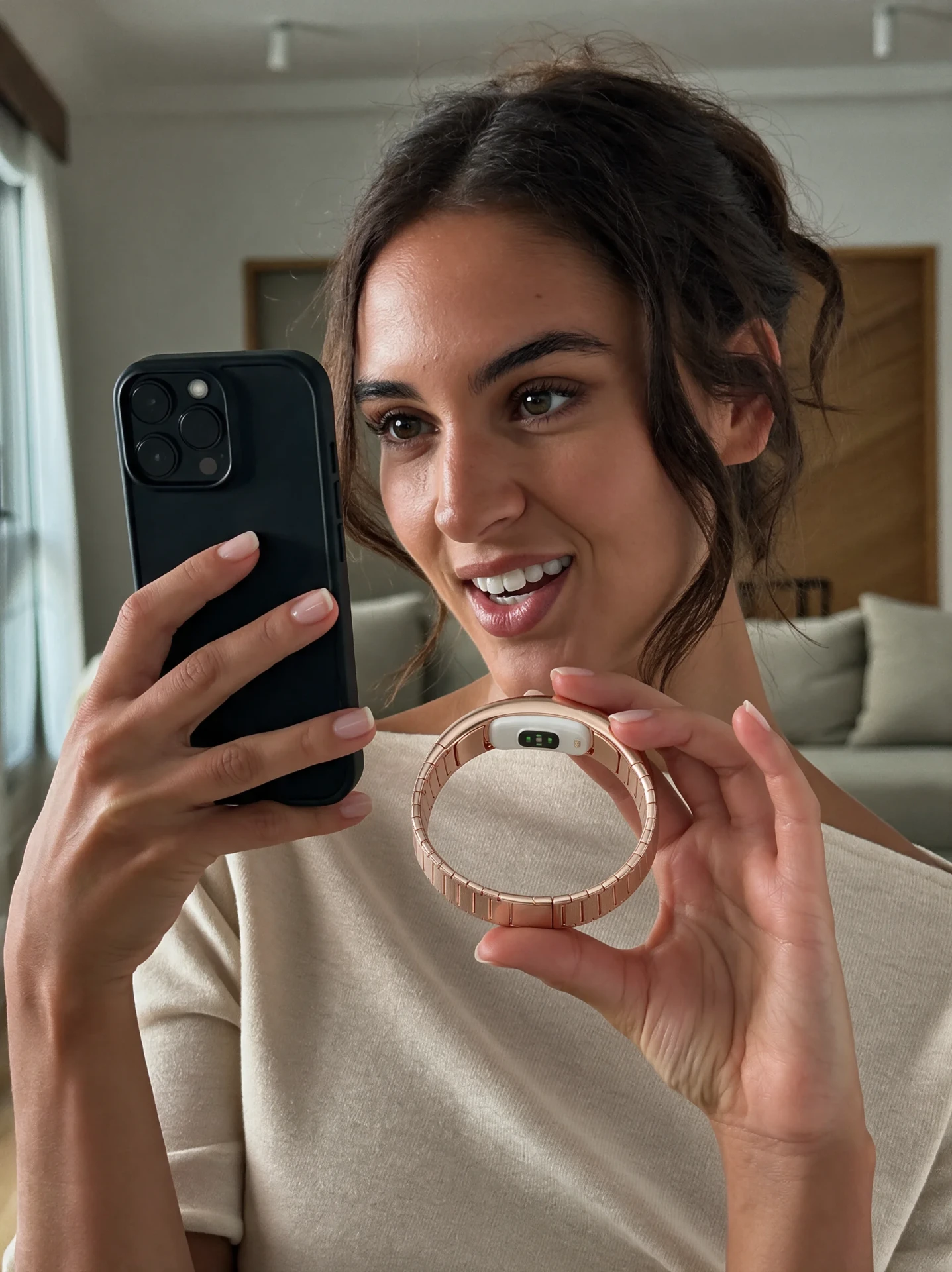
Interactive 3D model
Rotate the WHOOP band
THE OPPORTUNITY
WHOOP is built for performance.
But a wearable is also something you wear.
THE REDESIGN
Designed to blend in, not stand out.
A more fashion-forward WHOOP, built for everyday wear.
THE ECOSYSTEM
Partner with brands women already love.
Fashion × Fitness × WHOOP
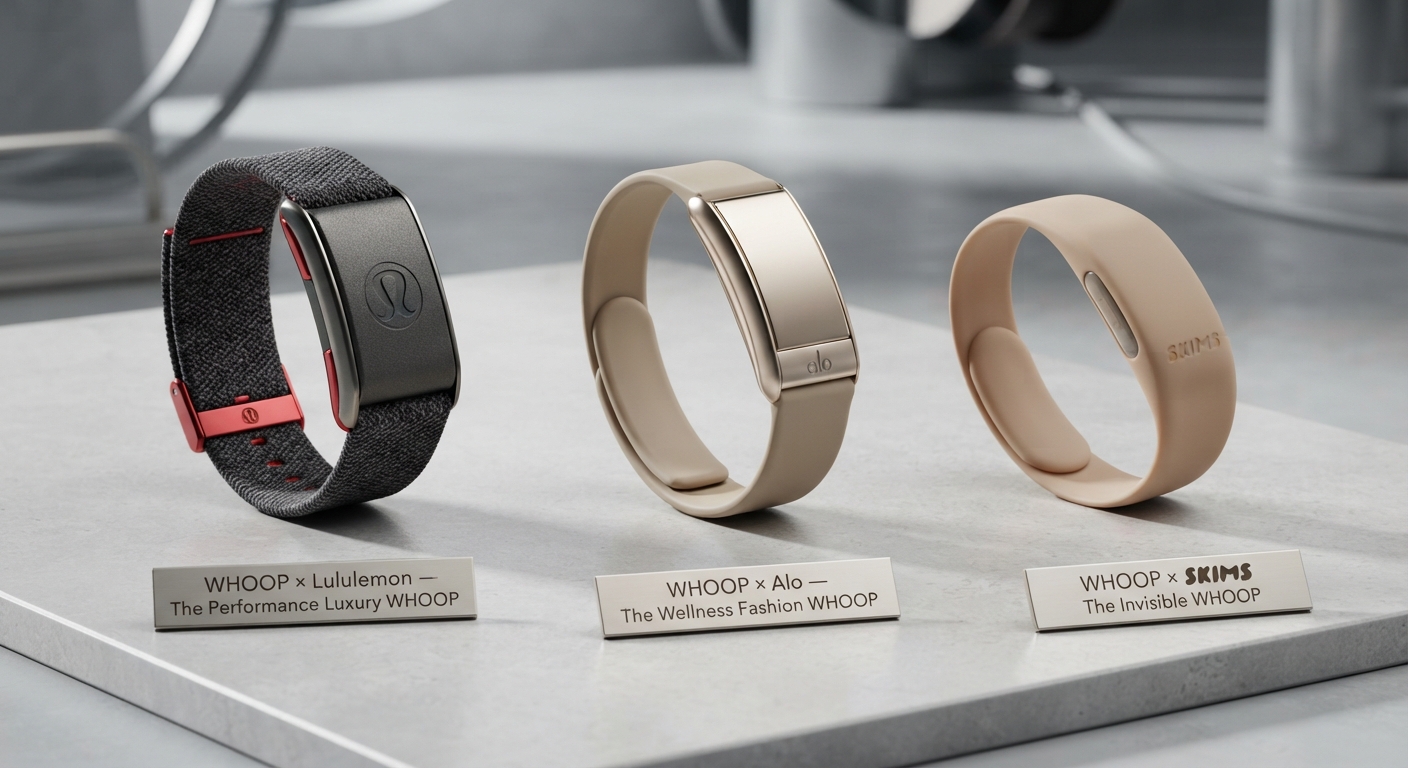
More reasons to wear it.
More reasons to keep it on.
How I would measure it
Wear consistency
Not the outcome: units sold or launch sentiment. A better-looking band only matters if it stays on the wrist.
Candidate measures
- Daily wear rate
- Active days / week
- Wear hours
- 30-day retention
- Accessory attachment
- Conversion
Behavioral hypothesis. Needs validation
- More desirable design
- Higher wear consistency
- More continuous data
- More product value
- Potential retention benefit
I'm not claiming the redesign increases retention. Each arrow is an assumption, and only the first two can actually be tested in a pilot.
Current WHOOP design
Existing band, existing accessories, no styling change.
Fashion-forward design
Same sensor, redesigned form and materials, everyday-wear positioning.
Measure the difference in daily wear, active days, and 30-day retention over a matched cohort. The target is a directional lift, not a precise number.
Decision thresholds
Wear consistency meaningfully improves without hurting usability or satisfaction.
Users prefer the design in surveys, but wear behavior doesn't change.
Aesthetics don't meaningfully affect wear behavior. The constraint is elsewhere.
03
What if every gym became a WHOOP Lab?
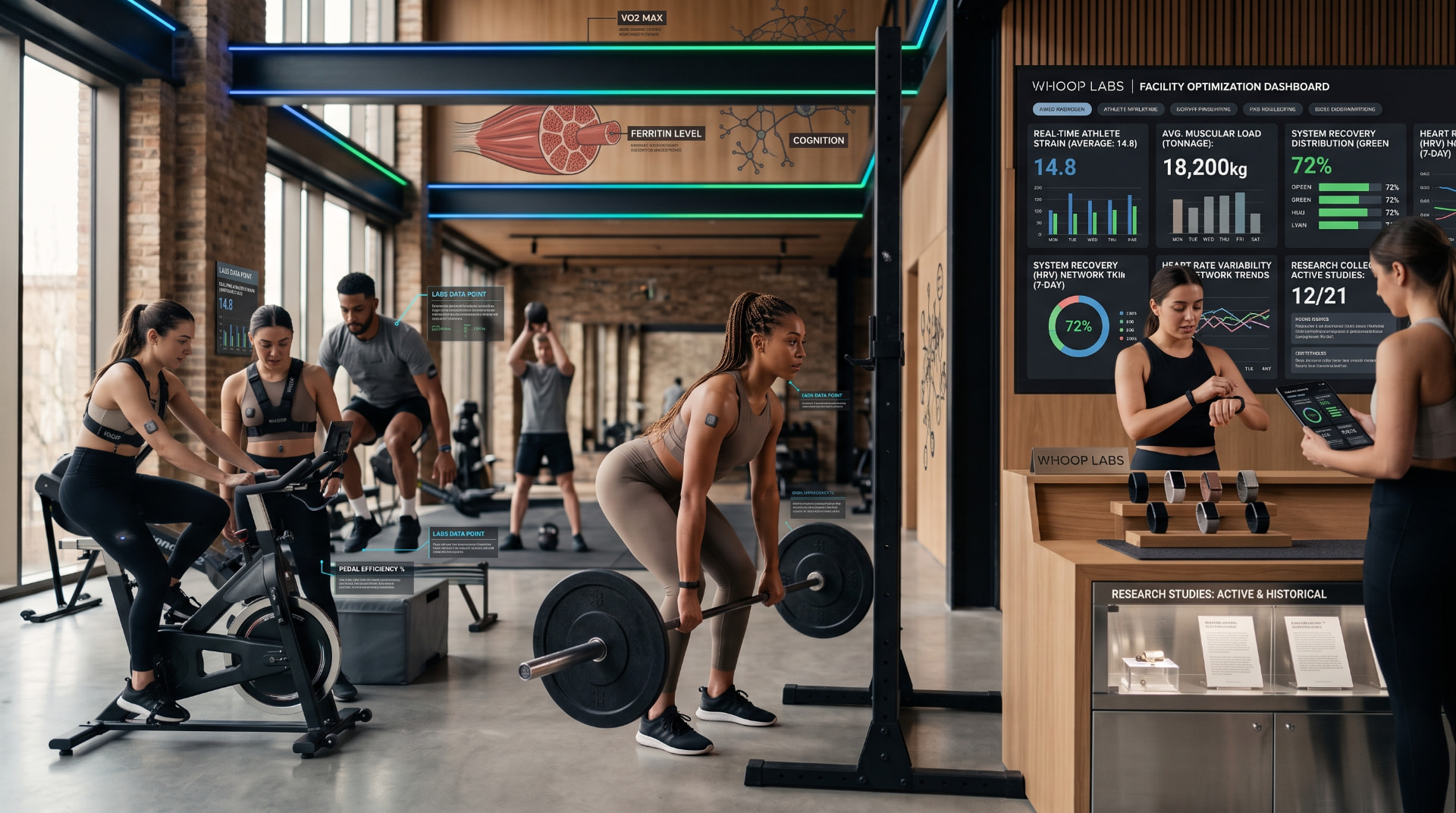
The offer
Try WHOOP.
Train.
Know more.
The growth loop
- Gym partner
- Free workout
- Personalized insight
- Share
- New user
The bet
K 1
Inspired by Ed Baker's growth philosophy: a product-led loop where every user helps create the next.
Try WHOOP before you subscribe.
Would the economics work?
The real question isn't "will people like the trial?" It's whether WHOOP can acquire customers this way at a sustainable CAC.
Illustrative synthetic scenario
Where would the acquisition funnel break?
Assumed rates for one facility running 1,000 trials. The step that matters is engaged \u2192 paid: if the experience doesn't become intent, nothing downstream is affordable.
| Step | People | Rate |
|---|---|---|
Trial participants Enrolled in a WHOOP-enabled class | 1,000 | — |
Activated Band fitted and paired | 700 | 70% of participants |
Engaged Meaningful in-app session | 500 | 71% of activated |
Shared / referred Showed someone their read-out | 150 | 30% of engaged |
Paid subscribers Subscribed within 30 days | 50 | 5% of participants |
Retained (D30) Still subscribed at day 30 | 40 | 80% of subscribers |
What one trial is assumed to cost
- DeviceBand amortised across a limited number of trials$45
- OperationsStaff time: fitting, onboarding, reset$20
- LogisticsShipping, replacement, sanitising kit$12
- SupportTrial-specific support contacts$6
- Partner costIncentive paid to the gym per trial$12
- Loss / damageAssumed shrinkage on shared hardware$5
The equation
CAC = total trial cost ÷ paid customers acquired
1,000 trials × $100 = $100,000 of spend. At the illustrative 5% conversion that is 50 paid customers.
Illustrative CAC
$2,000
Unlike software, a physical trial costs real money per participant. That's why viability, not desirability, is the first question WHOOP Labs has to answer.
| Paid conversion | Customers | Illustrative CAC |
|---|---|---|
| 3% | 30 | $3,333 |
| 5% | 50 | $2,000 |
| 8% | 80 | $1,250 |
| 10% | 100 | $1,000 |
| Lifetime contribution | LTV : CAC | Read |
|---|---|---|
| $1,000 | 0.5× | Not viable |
| $2,000 | 1.0× | Break-even |
| $3,000 | 1.5× | Potentially attractive |
| $4,000 | 2.0× | More attractive |
Conversion rate changes the economics of a physical trial a lot: the same $100,000 of spend produces a $3,333 CAC at 3% and a $1,250 CAC at 8%. LTV:CAC, not enthusiasm, is the decision framework.
Move the assumptions
Small changes in conversion swing the economics of a hardware-based acquisition strategy a lot. That's the case for piloting before scaling.
Break-even conversion
3.3%
Below this conversion rate, each customer costs more than the assumed contribution. Needs validation before any scale decision.
Break-even analysis
How does CAC move with conversion?
The dashed line is the assumed lifetime contribution. Where the curve is above it, the channel loses money at that conversion rate.
Decision thresholds
Trial conversion and retention together produce an attractive CAC against assumed lifetime contribution.
Engagement in the gym is strong but conversion or unit economics are weak. Change the offer, targeting, or cost stack.
The cost of physical acquisition can't reasonably support the resulting customer value.
Observation
Illustrative trial conversion is 5% of participants.
Interpretation
Physical acquisition is expensive at this conversion rate, roughly a $2,000 CAC on assumed costs.
Hypothesis
Higher-intent settings push conversion toward 8%, which improves CAC a lot.
Experiment
Run WHOOP Labs in high-intent fitness classes and measure conversion and 30-day retention against the funnel above.
Decision
Scale only if conversion and retention justify acquisition cost. Otherwise, iterate on the offer or stop.
WHOOP
KNOW YOURSELF.